The Founder
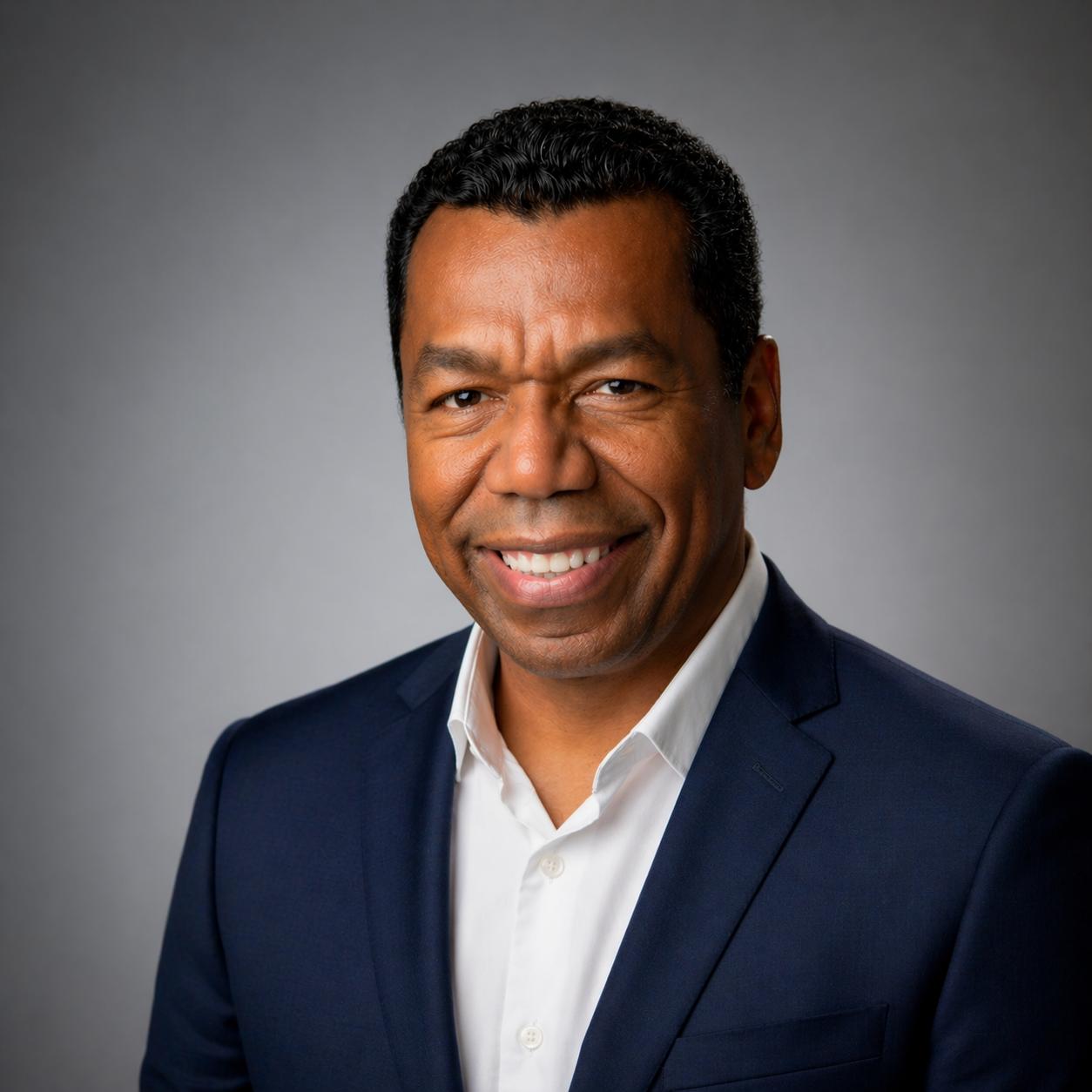
Eric A. Adames —
Founder & Principal
For decades, I have had the privilege of accompanying financial institutions across different countries, working alongside boards of directors, general managers, and executive teams facing some of the most complex challenges in their history. Though every institution had a different reality, something kept repeating itself.
I would find organizations with well-designed strategies, committed teams, and deeply capable people. They knew where they wanted to go. They even knew which decisions needed to be made. And yet, when I returned months later, I would find that very little had changed.
That's when I understood that the real challenge was almost never the strategy. It was an organization's capacity to turn that strategy into a new way of thinking, talking, and acting. That realization completely changed how I work.
Since then, I stopped showing up with answers. Today I prefer to show up with questions. I want to understand how a board of directors thinks, how an executive team talks to each other, and which topics they've been avoiding for too long — because I've learned that the answers that matter most rarely show up in a report. They show up when a leadership team finds the space to think more clearly and question what it always took for granted.
A few years ago, at the end of a working session, an executive director told me something I still remember with a smile: "What I like most — and at the same time what makes me most uncomfortable — about working with you is that you force us to think."
I never took that comment as criticism. I understood it as the highest recognition I could receive. I don't believe my job is to convince people that I'm right. Nor do I believe an institution needs another report telling it what it already knows. I believe the best transformations begin when leadership finds the courage to ask different questions, hold difficult conversations, and look at its reality honestly.
That is why SendoAgil was born. Not to deliver strategies. Not to produce diagnostics. But to accompany the people who carry the responsibility of leading institutions, and help them build the capacity to make real what they already know they need to do.
There's a question I still get asked often: how do you know if an organization can transform? My answer is always the same. I don't know. What I have learned to recognize is when an organization truly wants to transform. And when I find that commitment, I know the work we'll do together can leave a mark far deeper than a project. It can change the way a team thinks, decides, and leads.
That has been my greatest satisfaction throughout all these years. Not seeing organizations that depend on a consultant. But leaders who discover they always had, within themselves, the capacity to build their institution's future.
Over the years I came to understand that a strategy, on its own, has never transformed an institution. People do. My work simply consists of helping them think more clearly, ask themselves better questions, and build the conditions for that transformation to actually happen. If, by the end of our work, an institution thinks better, talks to itself better, and makes better decisions, then we will have achieved far more than completing a project.
Why This Sector
The sector where the stakes are highest and the tools are least developed.
SendoAgil's focus on cooperative financial institutions is not a positioning decision. It is a conviction. Cooperatives, Cajas, and Credit Unions across Latin America serve populations that commercial banks ignore — 40 million members across nearly 5,000 institutions managing $181 billion in assets.
Most of the transformation frameworks designed for this sector were built for commercial banks with professional boards, dedicated strategy functions, and capital structures that allow for error. The cooperative sector has none of those conditions. It operates under democratic governance constraints, politically complex Consejo dynamics, and margin pressure that makes every capital allocation decision consequential.
That is the environment SendoAgil was built for.
The Firm
Built for this moment in this sector.
Our partner model is deliberate. The cooperative financial sector's transformation challenges are deeply local — shaped by specific regulatory timelines, country-level morosidad dynamics, and the particular political and cultural context of each institution's governance. We build local capability into every engagement by design.
These five disciplines are not service lines that operate independently. They are integrated capabilities deployed together — because institutions that fail do so at the intersection of all five, not at the failure of one.
See Full Offer →SendoAgil operates through a curated network of sector-specific partners in each priority market — professionals with existing regulatory knowledge and institutional relationships.
Trusted by financial institutions across Latin America
What Clients Say
The measure of this work is what changes after we leave.
Eric was the leader of the effort — skillfully connecting with executives, exposing voids, holding up the mirror, speaking truth, and professionally holding leaders accountable in their transformation.
The next testimonial here will come from a CEO or Consejo President of a cooperative financial institution — the highest-priority content gap on this page.
Coming — Phase 2